Day Two
Time: 03.00 pm - 06.00 pm
Here are still images from my second day of filming. I did not use flash in any of these so that I could demonstrate the lighting more clearly (and the shadow puppets would have been invisible had I used flash).


 Hannah contributed to the choreography, on the day Beth and her rehearesed between takes.

 Due to filming in an enclosed area, it was important that I made clear which areas would or wouldn't be in shot. This was particulalry important when filming long shots, where the aim was to get full body footage.


I used gold reflectors for the close ups of Beth's face. This was consistent with the yellow glow that the lights gave off, and gave a warmer tint that I would have acheived with silver reflectors.


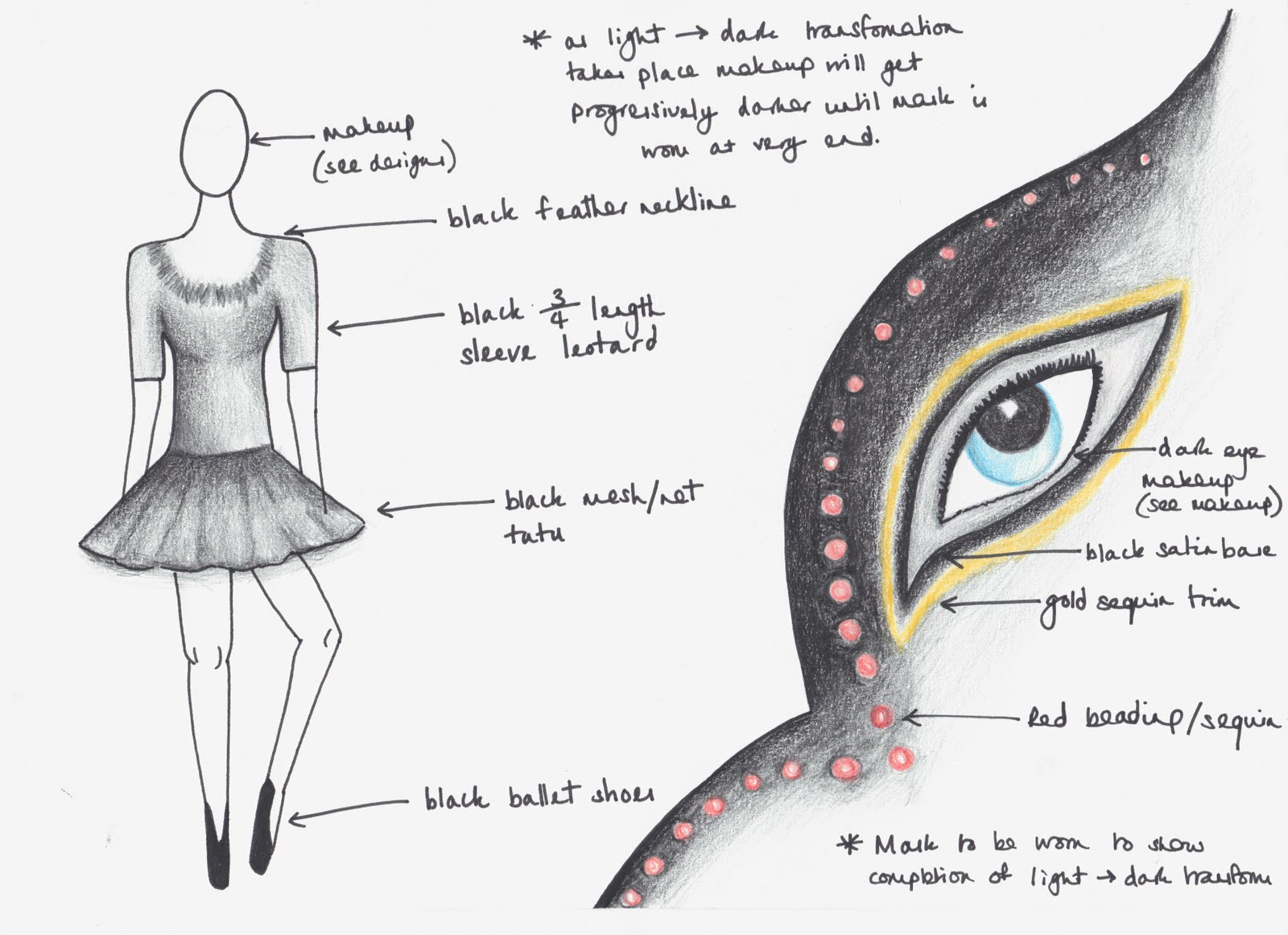
This was the second costume. It was identical to the first, but instead used black materials. I also decided she should wear a black mask to fully orchestrate the change from the first outfit. This was beneficial also, as the sequins reflected the spotlights and acted as a further light source. (particularly important as we were filming black on black.)




Ariel and Ursula (The Little Mermaid 1989 Disney)
Undeniably the concept of allowing children to seperate good and bad characters through the way they are visually represented has been incredibly successful. To a young audience a character that looks nice generally is nice, there are rarely occasions whereby children are encouraged not to judge a book by its cover. Rathermore the act of making assumptions as to a character's behaviour and intentions based on thier appearance is crucial to the plot and in bringing about the moral at the end of the tale. It is not suprising then that this idea filters into much more than just childrens films. Though there is much more scope in an adult film to trick the audience by misrepresenting a character in the way they look and thus the assumptions made by the audience that they are a character of low moral standard. In fact this is a very commonly used tactic by filmakers. Who would have thought that Keyser Söze (Usual Suspects 1995) was the baby faced, stuttering 'Verbal' Kint? Ultimately audiences are encouraged to jump to conculsions about characters based on how they look, only then can a filmaker truly surprise the audience.


Luke Skywalker and Darth Vader (Star Wars)
With this in mind, in my music video I aim to utilise the light/dark conventions to demonstrate a divide in the protagonist. Rather than using two characters to explore the good/bad divide, I'm going to use one to suggest a split in the character's own psyche. This is very much inspired by the theme of 'split personality' in many thrillers, for example Fight Club 1999 and Black Swan 2011. I feel this will give my piece a darker edge, which is synonomous with the work of inide artists whose videos tend to appeal more to a cult audience of followers rather than the bulk of mainstream audiences. As a result I am going to heavily rely on costume and lighting to create the contrast between the seemingly innocent light side of the protagonist and the dangerous dark side.


